
Παρουσίαση/Προβολή
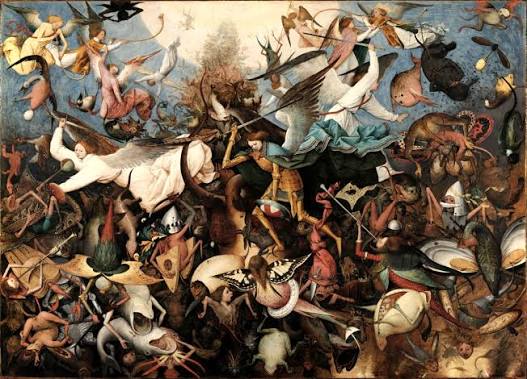
Order and Crisis in International Political Thought
(120572) - Βασίλειος Παϊπάης / Vassilios Paipais
Περιγραφή Μαθήματος
This course explores important moments in the development of international political thought through the lens of the interrelation between the concepts of order and crisis in modernity. Contemporary debates about the crisis of ‘Liberal World Order’ often obscure the fact that modern politics have congenitally been constructed around a dialectical and mutually constitutive relationship between order and crisis that explains why modernity has been vastly more dynamic than any previous type of social order. Since Machiavelli’s and Hobbes’ subversion of the medieval world order, and through the Enlightenment’s attack on the ancien régime and then through the great political, social, and scientific revolutions of the 19th century, the rise of totalitarian movements in the 20th century, and the post-WWII wave of decolonisation up to the contemporary crisis of democratic politics and the challenge of populism, the discourse of crisis has been consistently applied as an analytical and diagnostic tool in moments of contestation and transition when a previous world order is disputed and a new vision of world order is about to be born. In this course, we will examine a series of modern crises such as those of: power politics, war and peace, revolution and reaction, capitalism and imperialism, liberalism, colonialism, Marxism, neoliberalism, and populism. These topics will be approached through the international political thought of pairs of global thinkers as varied as: Machiavelli and Hobbes; Rousseau and Kant; Burke and Paine; Marx and Lenin; Schmitt and Shklar; Fanon and Said; Fukuyama and Derrida; Foucault and Agamben; Müller and Laclau.
Ημερομηνία δημιουργίας
Κυριακή 13 Σεπτεμβρίου 2026
-
Περίγραμμα
Δεν υπάρχει περίγραμμα